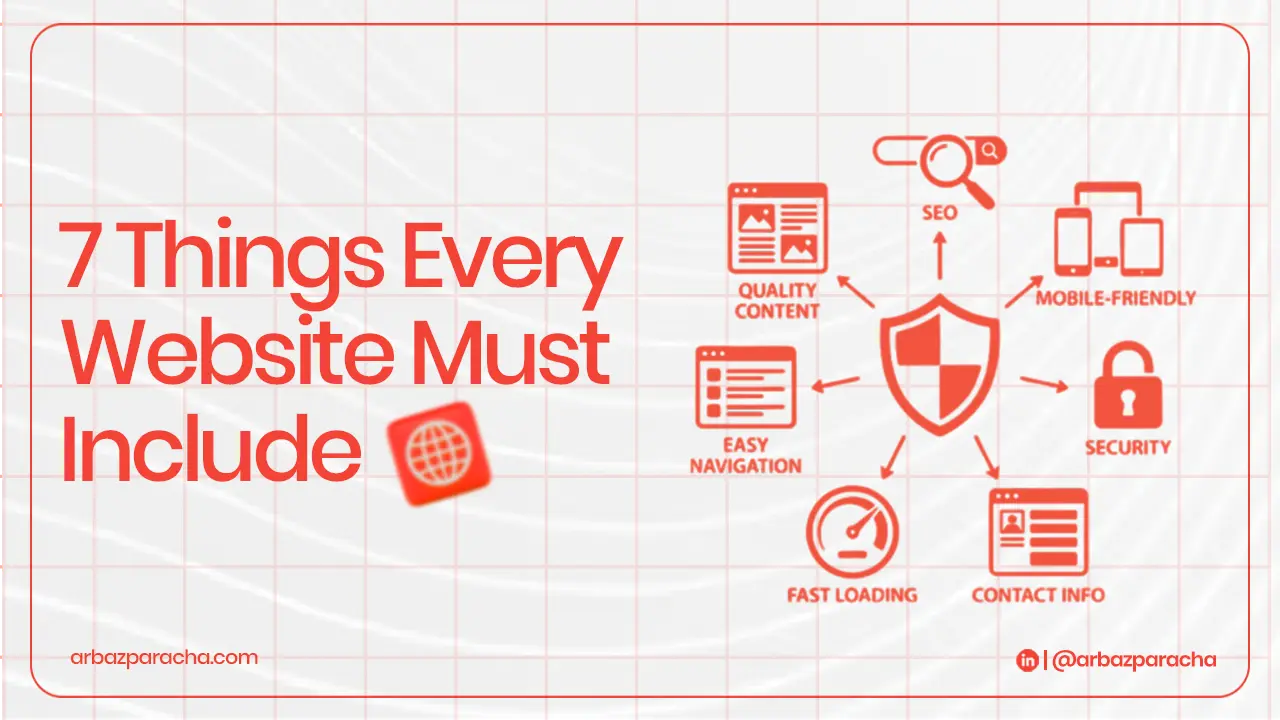
Your website is not just an online brochure. It is your best salesperson that works 24/7, never gets tired, and talks to people before you ever do. Your website must include these 7 things to attract leads
But you know that most websites lose trust in the first 5 seconds? no… not because the business is bad, but because the basics are missing or unclear.
Here are the 7 things your website must include if you actually want leads, sales, and trust.
1. A Clear Message in the First 5 Seconds
This is the most ignored part of most websites.
When someone lands on your homepage, they should instantly know:
- What you do?
- Who do you help?
- What result will you give?
Not your brand story, mission, or years of experience.
Example:
A bad one…
“Welcome to our official website where innovation meets excellence.”
A good one…
“We build fast websites that help small businesses get more leads in 30 days.”
Sometimes even small details confuse people, like…
Many businesses hide their real offer inside long paragraphs. People do not read. They scan. Your main message must be big, bold, and impossible to miss.
From experience, I have seen conversion rates double just by rewriting the first headline
2. A Strong CTA
A CTA simply tells people what to do next.
Examples:
- Book a free call
- Get a quote
- Download the guide
- Message us on WhatsApp
Most websites either:
- Have no CTA
- Or hide it at the bottom
If people like your site but do not know what to do next, they simply leave.
Small thing people stress about:
“Should I use Buy Now or Contact Us?”
Use the action that feels easiest. Low pressure actions convert better.
“Book a free call” beats “Buy now” in most service businesses.
3. Trust Builders
People do not trust websites easily so we must earn it fast.
Your website should clearly show:
- Real client testimonials
- Reviews or ratings
- Logos of clients you worked with
- Real photos of you or your team
- Clear contact details
Small confusing detail:
Many people use fake stock testimonials, and honestly… visitors can feel it. Even one real short review with a real photo builds more trust than ten fake ones.
Right way?
I once worked with a client who had traffic but no leads. We added just three real testimonials, and leads started coming within a week.
4. Simple and Clear Navigation
Your menu should help people, not confuse them.
Best basic structure:
- Home
- About
- Services
- Work or Case Studies
- Contact
Common mistake:
Too many menu items, Too many dropdowns, and too much thinking
If a visitor has to think about where to click, you already lost them.
Small thing people overthink:
“What should I name my service page?”
Use simple words. “Services” works better than clever names.
5. A Proper About Page
People check the About page before they trust you with their money.
A good About page should answer:
- Who you are
- Why you do this work
- Who you help
- How you are different
Not a long life story or any corporate language
Small confusing detail:
Do not write your about like a resume… that does not build connection. Write it like you are talking to one person.
From my work: Businesses that show the founder’s real story and face almost always convert better.
6. Fast Loading Speed
If your site is slow, your marketing is wasted. Simple as that.
What people actually worry about:
- Why is my site slow on mobile?
- Do images affect speed?
- Does hosting matter?
Short answer… Yes to all.
Basic things every site must have:
- Compressed images
- Good hosting
- Clean design, not heavy sliders
- Mobile optimization
A delay of even 2 seconds can drop conversions by a huge margin. Most people never complain… they just leave.
7. A Contact System
This sounds basic. It is not.
Your website should make it stupidly easy for someone to reach you.
Must-haves:
- Contact form that works
- Clickable email
- Clickable phone number
- WhatsApp button if your market uses it
- Google Map if you have a physical location
Things to take care of:
Broken contact forms. I still see this… Businesses run ads to dead forms and never even know how many leads they lost.
Websites do not usually fail because of design
They fail because of:
- Unclear message
- No trust
- No clear next step
- Slow speed
- Confusing structure
If you fix just these 7 things, your website will already be ahead of 80 percent of your competitors. Need help with this? Reach out to us here.