Look, I’m going to be straight with you. I know what you are thinking… AI for SEO? sound strange right? But that’s not.
AI is playing a big role in SEO these days and most people are using it wrong. They’re either treating it like a magic wand that’ll solve all their problems, or they’re terrified it’ll affect their rankings.
The truth? It’s neither.
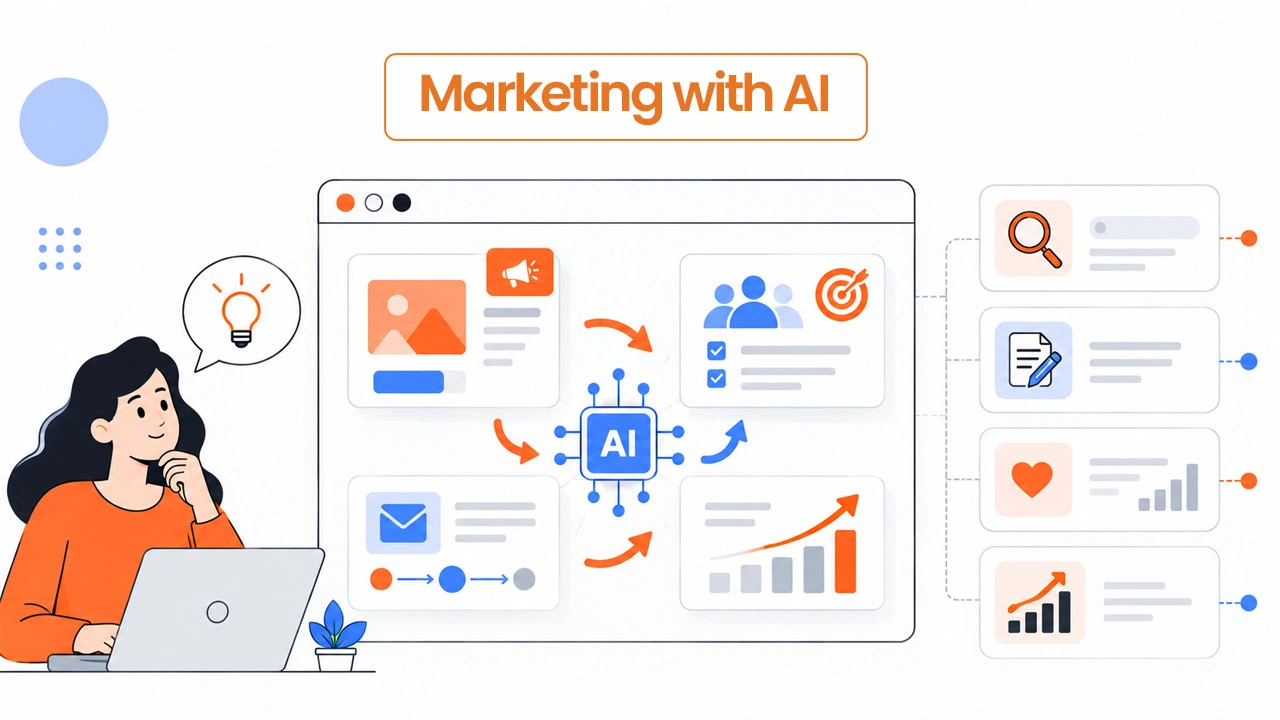
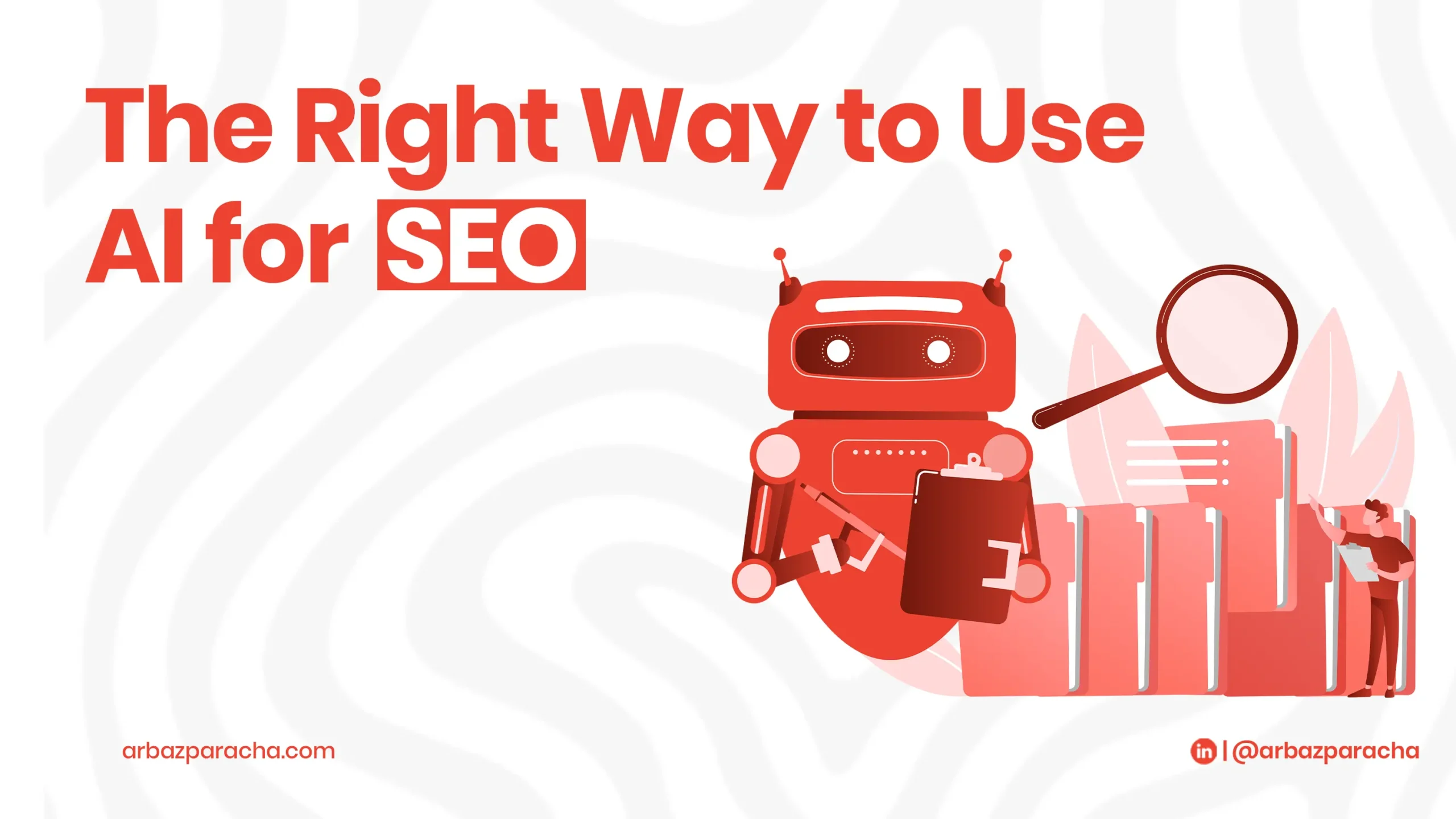
AI is a tool, and like any power tool, it can either build something amazing or make a complete mess depending on how you use it. So let’s talk about how to use AI for seo or the right way to use AI for SEO, backed by what’s actually worked in 2025.
Why AI Matters?
Remember when SEO was just about stuffing keywords and building sketchy backlinks? Yeah, those days are dead. Now search itself has fundamentally changed.
Google processes over 14 billion searches daily, a 22% increase from 2024. But people aren’t just searching on Google anymore, they’re asking ChatGPT, Perplexity, Gemini, and other AI platforms. ChatGPT ranks as the 5th most visited site globally, with nearly 5 billion visits per month.
Crazy, isn’t it?
Your customers are getting answers from AI before they even click on your website. If you’re not optimizing for these platforms, you’re invisible where it matters most.
But the best part hidden in these changes is that the CTR for the #1 organic result on Google is now 39.8%, up from 39.6% last year.
Which means quality is winning. The clicks that do happen are more intentional and valuable. People who click through are genuinely interested and ready to convert
Business Impact
86% of SEO professionals have already integrated AI into their strategy and they’re not doing it for fun. About 1 in 5 marketing teams improved productivity by 50% with the help of AI.
But productivity isn’t the only metric that matters.
Companies using AI strategically are seeing traffic explosions. One agency achieved a 4,162% year over year growth in organic traffic by focusing on AI optimized content.
Another industrial manufacturer saw 2,300% growth in monthly AI referral traffic within a year.
So let’s talk about ways to use AI for SEO in better way …
Smart Ways to Use AI for SEO
Alright, let’s get tactical. Here’s how you should actually be using AI to dominate search in 2025.
1. Keyword Research
Instead of manual keyword research use AI to analyse user intent, search trends, and competitor strategies for identifying the most relevant and impactful keywords.
But here’s the important part…
AI doesn’t just give you keywords, It helps you understand the why behind them.
Pro tip: Don’t just ask AI for popular keywords, that’s a rookie mistake. Instead, feed it real data from your analytics, give it context about your business, and ask it to identify opportunities your competitors are missing.
2. Content Creation
Here’s where most people screw up.
They think AI content creation means: Type prompt → Copy output → Publish → Profit.
But that’s not how it works…
The right approach is to use AI as your research assistant and first draft writer, then add the human touch in it.
3. Technical SEO Optimization
AI absolutely shines at the technical stuff that makes most people’s eyes glaze over. We’re talking about analyzing site structure, identifying crawl errors, optimizing page speed, and fixing broken links.
AI can automatically optimize on-page elements such as title tags and meta descriptions and off-page elements such as external links. This saves you hours of manual work and ensures consistency across your entire site.
But here’s something most people miss, AI can now help you optimize for AI search engines specifically. This includes implementing structured data, creating FAQ style content that AI platforms love to cite, and ensuring your content is parseable by AI systems.
4. Competitor Analysis on Steroids
Remember when competitor analysis meant manually clicking through their site and taking notes? That’s the old scenario
AI tools can provide detailed analysis of your competitors’ websites, revealing valuable information such as the keywords they are ranking for, the backlinks they are receiving, and the content that is generating the most traffic.
But AI goes deeper. It can identify content gaps, topics your competitors haven’t covered yet. It can analyse why certain pages outrank yours and what you need to change.
It can even predict which of your competitor’s strategies will likely succeed or fail based on current trends.
5. Optimization for AI Platforms
It’s not enough to rank on Google anymore, you need to be the source that ChatGPT, Perplexity, and Gemini cite.
How do you do this? Several ways…
Make Your Content AI-Friendly
LLMs scan, chunk, and extract meaning from structured text
Use Question Style Headings
Instead of AEO overview, use “What is Answer Engine Optimization?” AI platforms love this format.
Implement Schema Markup
Pages implementing comprehensive structured data are roughly one third more likely to be cited or surfaced in AI generated answers
Create an llms.txt File
This is a new standard that tells AI crawlers which pages contain your most important information.
6. Content Refreshing and Optimization
AI is good at identifying which of your existing content needs updates. It can analyze performance trends, spot when content is becoming outdated, and suggest specific improvements.
The best way is to treat your content library as a living, breathing asset that needs regular maintenance, not a set it and forget it archive.
AI SEO Tools
Let me save you weeks of trial and error. Here are the ai tools for SEO actually worth your time and money:
- Surfer SEO:
Best for content optimization, balancing sophisticated NLP analysis with exceptional usability - Clearscope:
Another solid option with accurate topic suggestions and great for teams - Frase:
Analyzes SERP results for a given keyword to show how competitors structure their content, then generates an outline for your article using those collected insights.
- Semrush:
Tool is specifically designed for tracking your brand’s presence in AI answer engines. - SE Ranking:
More affordable all in one option with solid AI features. - Ahrefs:
The OG of SEO tools, now with enhanced AI capabilities for keyword research and content gap analysis.
- Rank Prompt:
Tracks and optimizes your presence across ChatGPT, Gemini, Perplexity, and Copilot. Essential if you’re serious about AI search optimization. - Profound:
High-end LLM analytics platform designed for CMOs and brand strategists who need to understand how their organization is perceived by AI models.
- ChatGPT:
ChatGPT offers helpful insights and the Projects feature lets you organize your work and create separate projects for different campaigns or clients. - Claude:
Excellent for conversational writing and maintaining brand voice. - Jasper AI:
Uses natural language processing to intelligently weave keywords into your content, ensuring they appear naturally without disrupting the flow.
- MarketMuse
Great for content briefs and topic modeling - BrightEdge
AI powered keyword research tool that takes a seed list of relevant keywords and gives you 100X more keywords that you can target.
What not to do
Here are the things you need to avoid
1. Publishing Unedited AI Content
This is the #1 mistake. Google’s scaled content abuse policy penalises unedited or low quality AI text.
Google’s stance is clear… they don’t care if AI wrote your content, but they do care if it’s garbage.
Always have a human editor review, fact check, and enhance AI generated content. Add real examples, update statistics, inject personality, and ensure it actually helps your readers.
2. Ignoring Technical SEO
Content is only half the battle. Great content means nothing if AI crawlers can’t access or understand it.
You need proper schema markup, fast page speeds, and logical site structure.
Don’t make the mistake of obsessing over content while your site has crawl errors, broken links, or mobile usability issues.
These technical problems will kill your rankings faster than thin content ever could.
3. Keyword Stuffing
Some folks think AI gives them permission to cram keywords everywhere. Wrong, AI models understand semantic context, not keyword frequency. Overloading prompts or text can hurt clarity.
4. Treating All AI Tools the Same
A common mistake is using a more generalized AI tool for every SEO task. This can lead to problems when trying to adapt this strategy and scale SEO efforts.
5. Ignoring E-E-A-T Requirements
Google’s E-E-A-T standards matter more than ever. Pure AI text lacks nuance and can cause misinformation.
6. Working in Silos
AI search optimization and traditional SEO differ significantly, but the core principles of traditional search optimization still apply to AI search.
7. Quantity Over Quality
With AI, it’s tempting to publish hundreds of articles quickly. Resist this urge. Flooding your site with hundreds of low value posts can trigger spam filters.
8. Not Fact Checking
AI can confidently present completely false information. It might cite non-existent studies, make up statistics, or misinterpret data.
Verify facts, check sources, and ensure accuracy before publishing
Conclusion
AI isn’t coming to SEO, it’s already here. The question isn’t whether you should use it, but whether you’re using it correctly.
Use AI to work faster and smarter
Use it to scale your efforts without sacrificing quality
Master the tools, avoid the pitfalls, and focus on creating content that deserves to be cited by Google, by ChatGPT, by your customers, and by your competitors
That’s the right way to use AI for SEO 😉